You’re standing in a tire shop parking lot, staring at the sidewall of your tire like it’s written in code. Numbers, letters, slashes, symbols—P235/65R17 104T. The tech is waiting, traffic’s flying by, and you’re wondering if you’re about to buy the wrong tires and regret it for the next 50,000 miles.
You’re not alone. Most drivers don’t really understand tire specs until something goes wrong—uneven wear, a failed inspection, poor handling in rain, or that scary wobble on the highway at 70 mph. I’ve seen it countless times, both in the shop and as a car owner myself.
This tire specs explanation is written for real drivers, not engineers. No fluff. No jargon overload. Just a clear, practical breakdown of what tire numbers mean, why they matter, and how understanding them can save you money, improve safety, and make your car feel right again.
Tire Specs Explained: Problem Explanation
Tire specs are stamped on every tire, but most drivers don’t know how to read them—or worse, they ignore them entirely. That leads to buying tires that technically “fit” but don’t perform correctly for your vehicle, driving style, or local weather.
When tire specifications are misunderstood, you can end up with poor traction in rain, reduced fuel economy, uneven tread wear, or steering that feels loose and unpredictable. In some cases, the wrong tire specs can even affect braking distance or trigger TPMS warnings.
Understanding tire specs isn’t about being a car expert. It’s about knowing enough to make a smart, safe choice when it matters—whether you’re replacing one tire or a full set.
Common Causes
Most confusion around tire specs comes from a few common issues:
- Tire sidewall numbers look intimidating and aren’t explained at purchase
- Drivers assume all tires with the same rim size are interchangeable
- Online tire shopping skips over spec details in favor of price
- Dealership or shop recommendations aren’t fully explained
- Mixing old tire knowledge with modern tire standards
I’ve seen drivers replace tires based on “what fits” instead of “what’s correct,” especially after moving, changing driving habits, or buying a used vehicle.
Tire Specs Explained: Symptoms / Warning Signs
If your tire specs don’t match your vehicle’s needs, you may notice:
- Steering feels vague or unstable at highway speeds
- Tires wearing faster on edges or center tread
- Poor wet or snow traction compared to expectations
- Increased road noise or vibration
- Repeated TPMS or pressure-related warnings
These symptoms often get blamed on alignment or suspension, when the real issue is incorrect tire specifications.
Tire Specs Explained: Step-by-Step Fixes / Solutions
Step 1: Find the Full Tire Code
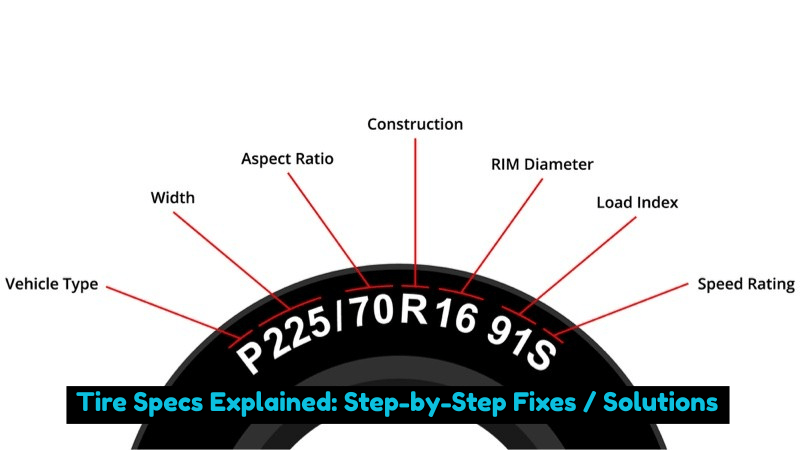
Look at the tire sidewall or your driver’s door jamb sticker. A common tire code looks like this:
P235/65R17 104T
Step 2: Break Down the Numbers
- P – Passenger vehicle tire (most cars and SUVs)
- 235 – Tire width in millimeters
- 65 – Aspect ratio (sidewall height as a percentage of width)
- R – Radial construction
- 17 – Wheel diameter in inches
Step 3: Understand Load Index and Speed Rating
- 104 – Load index (how much weight the tire can safely carry)
- T – Speed rating (maximum sustained speed capability)
These two are critical and often ignored. Installing a lower load index than recommended can affect handling and safety, especially in SUVs and trucks.
Step 4: Match OEM Specs First
Always start with the manufacturer’s recommended specs. They’re tuned for:
- Suspension geometry
- Braking performance
- Fuel economy
- Ride comfort
You can deviate slightly in some cases, but only when you understand the trade-offs.
Tire Specs Explained: DIY vs Professional Repair
DIY Understanding:
Learning tire specs yourself is absolutely doable and highly recommended. It helps you shop smarter online and avoid upsells.
Professional Guidance:
If you drive a truck, tow loads, or deal with snow and ice regularly, a professional recommendation is worth it. Shops can factor in real-world use that charts don’t show.
Bottom line: Learn the basics yourself, then confirm with a trusted tire professional if you’re changing size, load rating, or tire type.
Tire Specs Explained: Safety Considerations
Tire specs directly impact safety. Incorrect load ratings can cause overheating. Wrong speed ratings can lead to premature failure. Improper sizing affects ABS and traction control systems.
Never install tires with lower load or speed ratings than your vehicle requires. And avoid mixing different tire specs on the same axle—it’s a recipe for unpredictable handling, especially in emergency maneuvers or bad weather.
Tire Specs Explained: Cost Expectations
Understanding tire specs can save real money. Correctly matched tires last longer and wear evenly. In the US, replacing the wrong tires early can cost $400–$1,200 depending on vehicle type.
Spending a little time upfront reading tire specs often prevents costly mistakes down the road.
Prevention Tips
- Always check the driver’s door jamb tire label
- Match load index and speed rating at minimum
- Replace tires in pairs or full sets when possible
- Recheck specs when buying used vehicles
- Don’t rely on rim size alone
Think of tire specs as part of routine car ownership, not a one-time task.
Tire Specs Explained: Common Mistakes
- Buying tires based on price only
- Ignoring load index and speed rating
- Mixing tire specs front to rear
- Assuming “bigger” means “better”
- Trusting online fit tools without verifying specs
These mistakes show up later as handling problems and wasted money.
Conclusion / Final Advice
Tire specs don’t have to be confusing. Once you understand what the numbers mean, you’re in control—no pressure, no guesswork. The right tire specs improve safety, comfort, and long-term costs.
Next time you’re tire shopping, take an extra minute to read the sidewall. Your car—and your wallet—will thank you.
FAQs About Tire Specs Explained
1. What does the tire size number actually mean?
It shows the tire’s width, sidewall height, construction type, and wheel diameter. Each part affects ride quality, handling, and compatibility with your vehicle.
2. Can I change tire size from stock?
Yes, but only within safe limits. Changing size affects speedometer accuracy, clearance, and handling. Always verify before switching.
3. Is load index really that important?
Absolutely. It determines how much weight the tire can safely support. Ignoring it can lead to overheating or failure.
4. What happens if I use a lower speed rating?
The tire may wear faster, handle poorly, or fail under stress. Always meet or exceed the factory rating.
5. Are tire specs the same in the US and UK?
Mostly yes. The format is the same, though vehicle recommendations and driving conditions may differ.
6. Where can I find my car’s correct tire specs?
Check the driver’s door jamb sticker, owner’s manual, or manufacturer website.