
You ever hit the brakes on a rainy highway and feel your car slide just a little longer than it should?
That tiny moment of panic usually has one root cause: worn-out tire tread.
Most drivers don’t realize their tires are bald until it’s almost too late. I’ve seen it hundreds of times in the shop — tires that “look fine” but measure dangerously low. That’s where a tire depth gauge becomes your best friend. It’s a simple tool, costs less than a fast-food lunch, and can literally prevent an accident.
In this guide, I’ll show you exactly how to use a tire depth gauge tool, how to read it correctly, what numbers actually matter, and how to know when it’s time to replace your tires.
Let’s get into it.
What Is a Tire Depth Gauge?
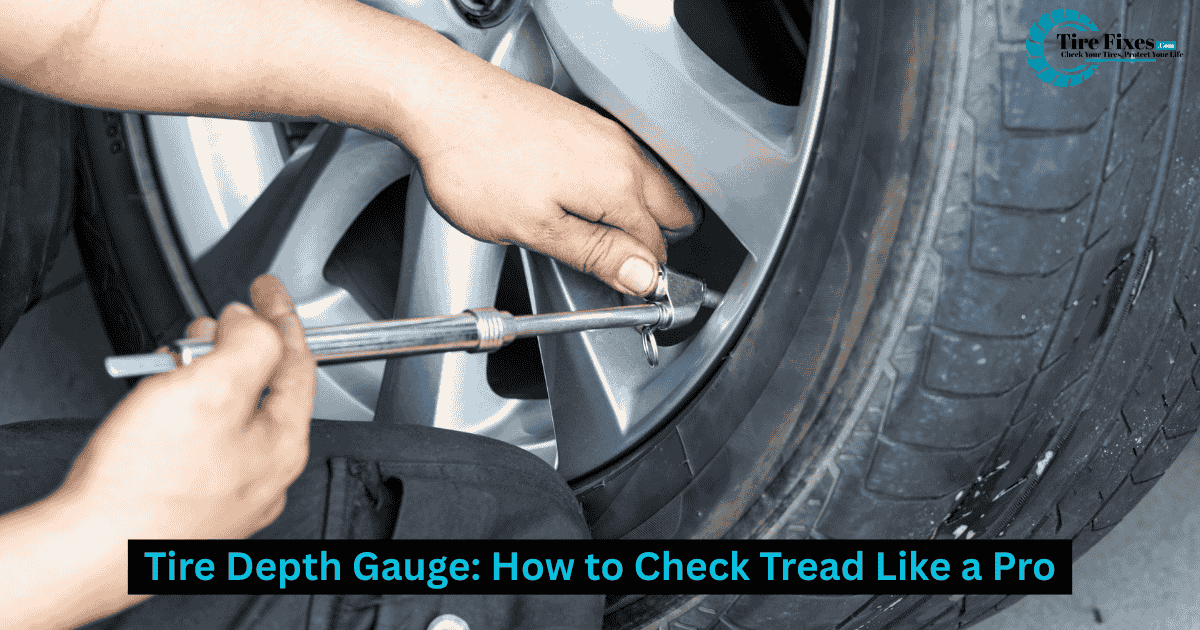
A tire depth gauge is a small measuring tool that checks how much tread is left on your tires. It measures in 32nds of an inch (standard in the US) or millimeters (common in the UK and Europe).
New passenger tires typically start at:
- 10/32″ to 12/32″ tread depth
- Some truck and winter tires go deeper
As you drive — commuting, road trips, hot pavement, potholes, snow — that tread slowly wears down.
Once you hit 2/32″, your tire is legally worn out in the US.
And honestly? Performance drops well before that.
Why Tire Tread Depth Matters More Than You Think
Tread isn’t just rubber patterns for looks.
It:
- Channels water away during rain
- Provides grip in snow
- Maintains traction during braking
- Keeps your car stable at highway speeds
When tread gets shallow:
- Hydroplaning risk increases
- Stopping distance grows
- Traction drops in wet weather
- Blowout risk rises in summer heat
I’ve tested vehicles at 70 mph with 3/32″ tread in heavy rain — it’s night and day compared to fresh 8/32″ tires. You feel the difference instantly.
Types of Tire Depth Gauge Tool Options
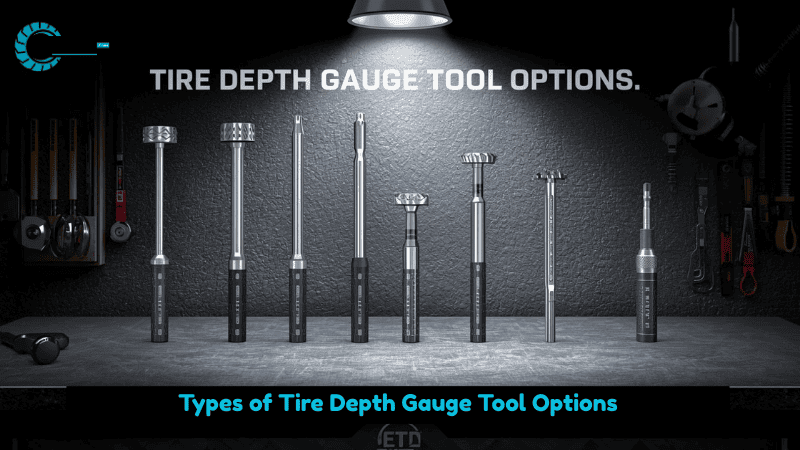
There are three common types you’ll see online or at auto parts stores.
1. Pencil-Style Gauge (Most Common)
Cheap. Simple. Reliable.
You press it into the tread and a small ruler pops out showing the measurement.
Best for:
- Quick driveway checks
- Keeping in your glove box
- Budget-friendly buyers
2. Dial Gauge
Has a circular dial display.
More precise than pencil versions and easier to read for some people.
Best for:
- DIY enthusiasts
- More accurate readings
3. Digital Tire Depth Gauge
This is the most accurate and easiest to read.
It displays the number on a small screen, usually in 32nds or millimeters.
Best for:
- Professional mechanics
- People who like precision
- Anyone who struggles reading small manual gauges
If you’re asking about the best tire depth gauge, honestly, a quality digital one is worth it. They’re still inexpensive and remove guesswork.
How to Read a Tire Depth Gauge (Step-by-Step)
A lot of people own one but don’t use it correctly.
Here’s exactly how to read tire depth gauge measurements properly:
Step 1: Park on Level Ground
Flat driveway or parking lot.
Step 2: Insert the Gauge into the Tread Groove
Place it in the deepest groove, not on the raised tread block.
Step 3: Press Down Firmly
Make sure the base is flush with the tire.
Step 4: Read the Number
- Pencil gauge: Look at where the rod stops
- Dial gauge: Check needle position
- Digital tire depth gauge: Read the screen
Step 5: Check Multiple Spots
Measure:
- Inside edge
- Center
- Outside edge
This helps detect uneven tire wear.
Tire Depth Gauge Chart (What the Numbers Mean)
Here’s a simple tire depth gauge chart you should remember:
| Tread Depth | Condition | What It Means |
|---|---|---|
| 10/32″–12/32″ | New | Excellent grip |
| 8/32″ | Very Good | Safe in rain |
| 6/32″ | Good | Replace soon for wet climates |
| 4/32″ | Worn | Reduced wet traction |
| 3/32″ | Unsafe in rain | High hydroplaning risk |
| 2/32″ | Legally worn out | Replace immediately |
If you live in states with heavy rain like Florida or Washington, I recommend replacing at 4/32″, not 2/32″.
For snow? 6/32″ minimum.
The Penny Test vs a Tire Depth Gauge
You’ve probably heard of the penny trick.
Insert a penny with Lincoln’s head upside down into the tread. If you can see all of Lincoln’s head, your tread is around 2/32″.
Is it better than nothing? Yes.
Is it accurate? Not really.
A proper tire depth gauge tool gives you exact numbers. No guessing. No eyeballing.
Signs You Should Check Your Tread Immediately
Don’t wait for your annual inspection.
Check your tire depth gauge if:
- You feel slipping in rain
- Your ABS activates often
- Tires look smooth or shiny
- You drive long highway commutes
- You just returned from a road trip
- It’s about to enter winter season
I personally check mine every oil change — about every 5,000 miles.
How Often Should You Use a Tire Depth Gauge?
For normal drivers:
- Every 1–2 months
- Before long trips
- Before winter
- After hitting major potholes
If you drive rideshare, delivery, or highway miles daily? Check monthly.
Tires wear faster than people think — especially in hot southern states like Texas or Arizona.
What Causes Uneven Tread Depth?
If your readings differ across the tire, that’s a warning sign.
Common causes:
- Improper tire pressure
- Bad alignment
- Worn suspension parts
- Lack of tire rotation
- Aggressive cornering
Inside wear usually means alignment issues.
Center wear usually means overinflation.
Edge wear usually means underinflation.
Your tire depth gauge doesn’t just tell you when to replace tires — it tells you if something else is wrong.
How Much Does a Tire Depth Gauge Cost?
You don’t need to spend much.
- Pencil gauge: $5–$10
- Dial gauge: $10–$20
- Digital tire depth gauge: $15–$30
That’s cheaper than one tank of gas — and way cheaper than replacing tires early due to neglect.
Best Tire Depth Gauge: What to Look For
If you’re shopping for the best tire depth gauge, focus on:
- Clear measurement markings
- Durable metal probe
- Easy-to-read display
- Measurement in 32nds and mm
- Auto shut-off (for digital versions)
Avoid ultra-cheap plastic ones that feel flimsy.
You want something that’ll survive in your glove box during summer heat and winter freezing temps.
Real-World Example: Why This Tool Matters
A customer came in last fall before a road trip from Ohio to Colorado.
He said his tires “looked fine.”
We checked them.
Front tires: 3/32″
Rear tires: 5/32″
Rainstorm in Kansas at 75 mph with 3/32″? That’s hydroplaning territory.
He replaced them before the trip.
Two weeks later, he emailed saying they hit heavy mountain rain — and he was grateful he didn’t gamble.
That’s the difference a $15 tool can make.
FAQs About Tire Depth Gauge
How accurate is a digital tire depth gauge?
Very accurate — usually within ±0.01 inches. For everyday drivers, it’s more than precise enough.
What is the legal minimum tire tread depth in the US?
2/32 of an inch. However, safety experts recommend replacing at 4/32″, especially for wet conditions.
Can I check tread depth without a tool?
You can use the penny test, but it’s not precise. A tire depth gauge tool gives exact readings and is much safer.
Is 4/32 tire tread bad?
It’s not illegal, but traction in rain drops significantly. If you live in a rainy state, start planning replacement.
How long does it take to check all four tires?
Less than 5 minutes. It’s one of the easiest maintenance checks you can do.


One Comment