Picture this. You’re heading home on I-75 after a long workday. Maybe it’s raining. Maybe traffic’s crawling. Suddenly — thump, thump, thump. Flat tire.
You pull over, throw on the spare, and now the big question hits: Can I drive home… or am I risking serious damage?
Most drivers don’t think about spare tires until they absolutely need one. And honestly, that’s normal. But spare tires aren’t built like regular tires. They’re designed to get you out of trouble — not carry you for weeks.
I’ve seen drivers push spare tires way past their limit. Sometimes they get lucky. Other times? Bent wheels, blown differentials, or a second roadside emergency. Let’s break down exactly how long you can drive on a spare tire — the safe way — based on real-world experience and manufacturer guidance.
How Long Can You Drive on a Spare Tire (Quick Answer)
Most spare tires are safe for:
- Distance: 50–70 miles max
- Speed: Under 50 mph
- Time: Only until you reach a repair shop
According to safety guidance referenced by organizations like National Highway Traffic Safety Administration, spare tires are temporary emergency tools — not replacements for regular driving tires.
And roadside groups like American Automobile Association regularly report breakdowns caused by people driving too far on spares.
Why Spare Tires Have Strict Driving Limits
Not all spares are equal. Some cars still come with full-size spares, but most modern vehicles use compact “donut” spares to save space and weight.
Here’s why limits exist:
1. Less Traction
Smaller tread = less grip in rain, snow, or hard turns.
2. Heat Builds Fast
Spare tires use lighter materials. Long drives cause dangerous heat buildup.
3. Vehicle Balance Changes
Uneven tire size stresses:
- Transmission
- Differential
- Suspension
- ABS systems
This is especially risky on AWD vehicles.
Types of Spare Tires (And How They Change Driving Distance)
Full-Size Spare Tire
Closest to a normal tire.
Safe Range:
- 100+ miles possible (if same tire type and condition)
But even here, many mechanics (myself included) still recommend replacing ASAP.
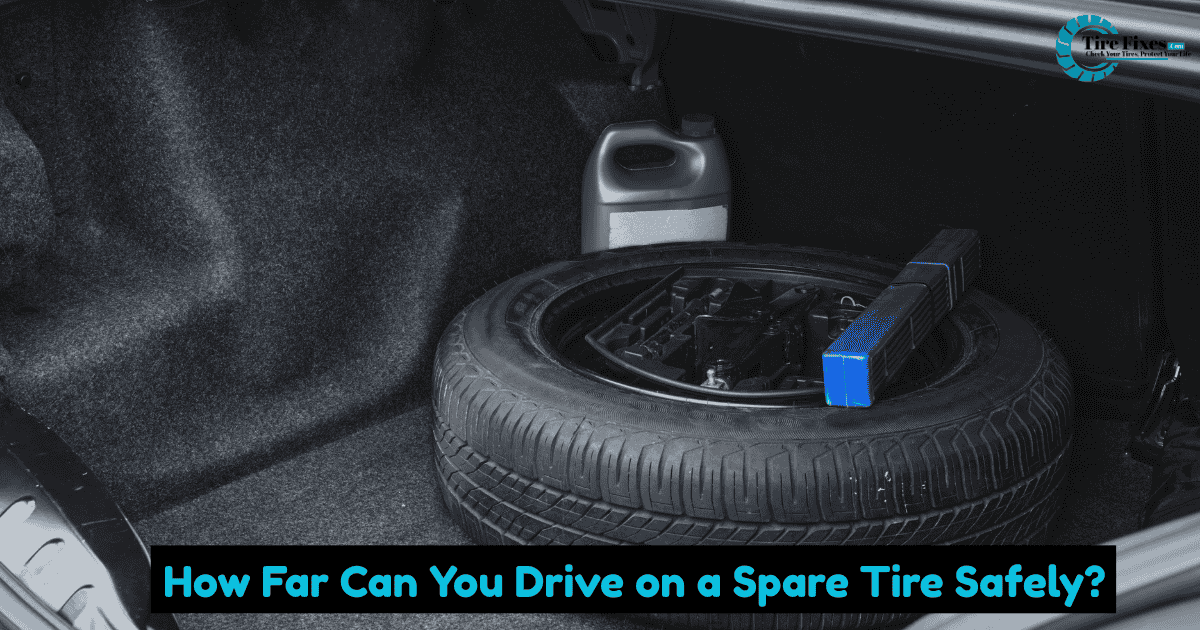
Donut Spare Tire (Most Common)
Small, lightweight, space-saving.
Safe Range:
- 50 miles ideal
- 70 miles absolute max emergency use
Tire manufacturers like Michelin design donuts strictly for temporary emergency use.
Run-Flat Tires (Not a Spare — But Worth Mentioning)
If your car has run-flats:
- Usually 50 miles after pressure loss
- Still speed-limited
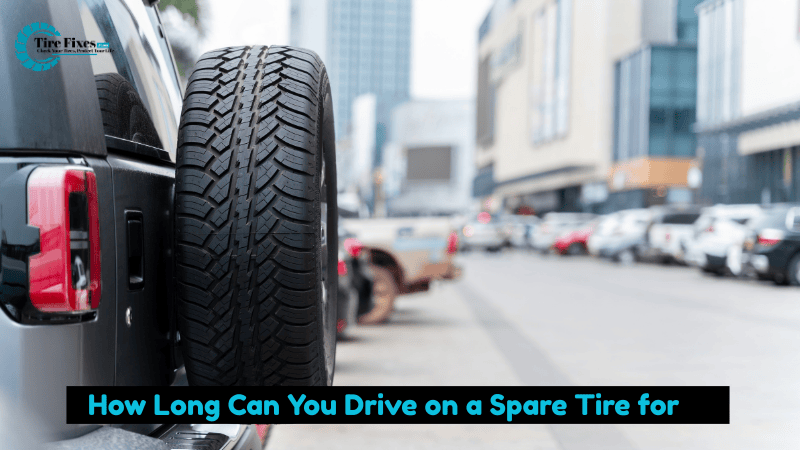
How Long Can You Drive on a Spare Tire for
Realistically, most drivers should aim for:
- Same-day tire repair or replacement
- Next-day absolute latest
From real shop experience, here’s what happens when drivers push limits:
| Distance Driven | Risk Level |
|---|---|
| 0–30 miles | Generally safe |
| 30–50 miles | Moderate wear risk |
| 50–70 miles | High failure risk |
| 70+ miles | Blowout or vehicle damage likely |
How Long Can You Drive on a Spare Tire?
This depends on three real-world factors most drivers don’t consider.
Road Type
Highway driving heats spare tires faster than city driving.
Weather
Hot asphalt in states like Arizona or Texas = higher blowout risk.
Vehicle Load
Family + luggage + spare tire = dangerous combo.
How Long Can You Drive on a Spare Tire Donut
Donut spares are where most drivers get into trouble.
Absolute Donut Spare Rules
- Max Speed: 50 mph
- Max Distance: 50 miles recommended
- Avoid:
- Hard braking
- Sharp turns
- Highway cruising
- Heavy cargo
From what I’ve personally seen in shops, donut failures often happen when drivers:
- Forget they installed it
- Use it for commuting
- Drive long highway distances
Real Driving Scenario (What Usually Happens)
Let’s say:
You get a flat leaving work.
You install the donut.
You drive 25 miles home.
Next morning you drive another 25 miles to work.
You’re already at the danger zone — even though it “feels fine.”
Spare tires don’t always fail gradually. Sometimes they just let go.
How Long Can You Drive on a Spare Tire Reddit (What Drivers Say vs Reality)
If you browse driver discussions online, you’ll see stories like:
- “I drove 200 miles on a donut.”
- “I used mine for 2 weeks.”
Here’s the truth:
Survivorship bias is real.
You don’t hear from drivers who:
- Blew the spare at 70 mph
- Damaged AWD systems ($2,000+ repair)
- Warped brake rotors
Signs You’re Pushing a Spare Tire Too Far
Stop driving immediately if you notice:
- Vibration
- Burning rubber smell
- Steering pull
- Tire bulging
- Loud road noise
These are early failure warnings.
What Happens If You Drive Too Long on a Spare Tire
From real-world shop repairs, common damage includes:
Transmission Stress
Uneven tire diameter confuses gear ratios.
Differential Damage
Especially common in AWD and 4WD vehicles.
Wheel Damage
Spare tires often have weaker rims.
Cost Reality (US Average)
If you ignore spare tire limits:
| Repair Type | Cost |
|---|---|
| New tire | $120–$350 |
| Wheel replacement | $300–$800 |
| Differential repair | $1,200–$3,000 |
| Transmission damage | $2,500–$5,000 |
Pro Mechanic Tips Most Websites Don’t Tell You
Rotate Spare Position (If Possible)
If front tire blows, move rear tire forward and put spare on rear.
Check Spare Pressure Monthly
Most spares sit unused for years and lose pressure.
Replace Old Spares
Even unused rubber degrades after 6–8 years.
Spare Tire Driving Safety Checklist
Before driving on a spare:
✔ Check PSI (usually 60 PSI for donuts)
✔ Avoid highways if possible
✔ Drive slow and steady
✔ Go straight to tire shop
✔ Don’t tow or haul heavy loads
When It’s Actually OK to Drive Longer
Rare cases:
- Full-size matching spare
- Same tread depth
- Same tire model
- Short-term emergency use
Even then, treat it as temporary.
FAQs
Can I drive 100 miles on a spare tire?
Only if it’s a full-size spare and conditions are ideal. Donut spares should never be pushed that far.
Can I drive on a spare tire for a week?
Not recommended. Even if it holds up, you risk major vehicle damage.
What speed can you drive on a spare tire?
Most spares are limited to 50 mph max.
Is it safe to drive highway speeds on a spare tire?
No. Highway heat buildup increases blowout risk.
Do spare tires expire?
Yes. Rubber degrades over time even if unused.