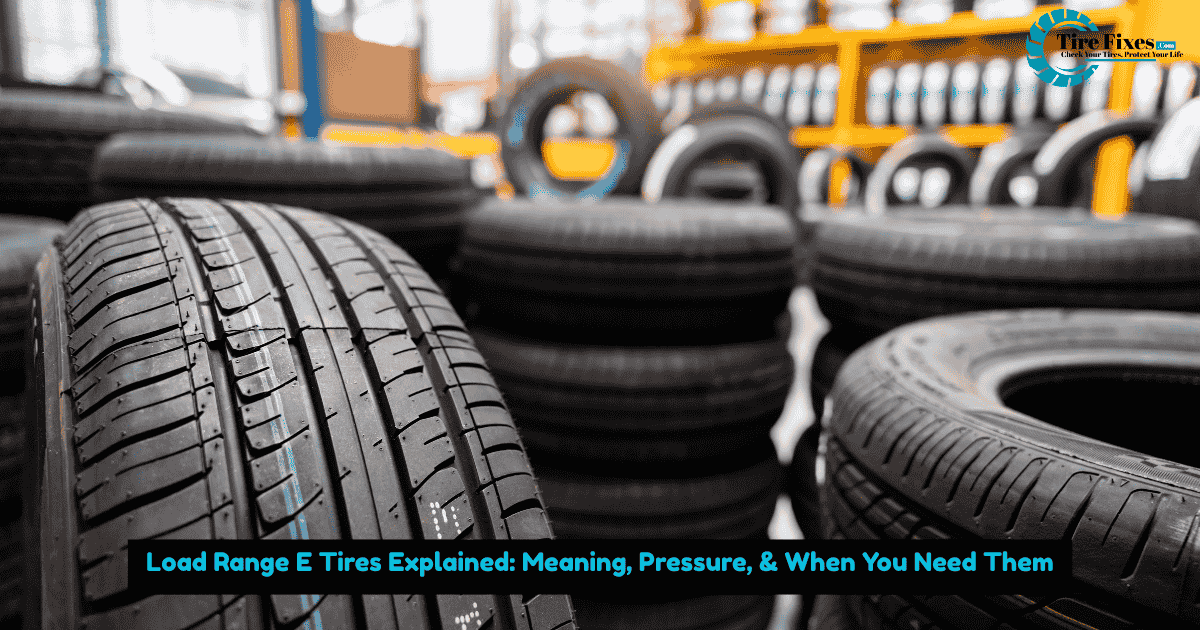
If you’ve ever stood in a tire shop parking lot, staring at the sidewall of a tire and wondering “What does load range E even mean?” — you’re not alone. I’ve had that exact conversation with truck owners, RV folks, and trailer haulers more times than I can count.
Picture this: you’re towing a loaded camper down I-70, it’s 95°F, crosswinds are kicking up, and your tires are the only thing keeping several thousand pounds under control. That’s where load range E tires come into the conversation — and why understanding them matters a lot more than most people think.
This guide breaks it all down in plain English. No fluff. No tire-shop scare tactics. Just real-world info from years of wrenching, towing, and driving on US roads.
What Is Load Range E on a Tire?
Load range E refers to a tire’s maximum weight-carrying capability and air pressure rating.
In simple terms, a load range E tire is built to handle heavy loads and higher air pressure than standard passenger or light-duty tires.
Here’s the quick breakdown:
- Load Range E tires are typically rated for up to 80 PSI
- Commonly used on:
- Heavy-duty pickup trucks
- Towing setups
- RVs
- Commercial trailers
- Stronger internal construction than load range C or D tires
You’ll see it stamped right on the sidewall as “Load Range E” or sometimes just “E”.
Load Range E Tire Rating Explained (Without the Confusion)
Older tires used to be described by ply count — like “10-ply tires.” Modern tires don’t actually use that many physical plies anymore, but the terminology stuck.
What Ply Is a Load Range E Tire?
- Load Range E = 10-ply rating
- That doesn’t mean 10 actual layers
- It means equivalent strength to a traditional 10-ply tire
Modern materials are stronger, lighter, and more heat-resistant — so manufacturers don’t need as many layers to get the same strength.
Load Range E Tires Weight Rating (Real Numbers)
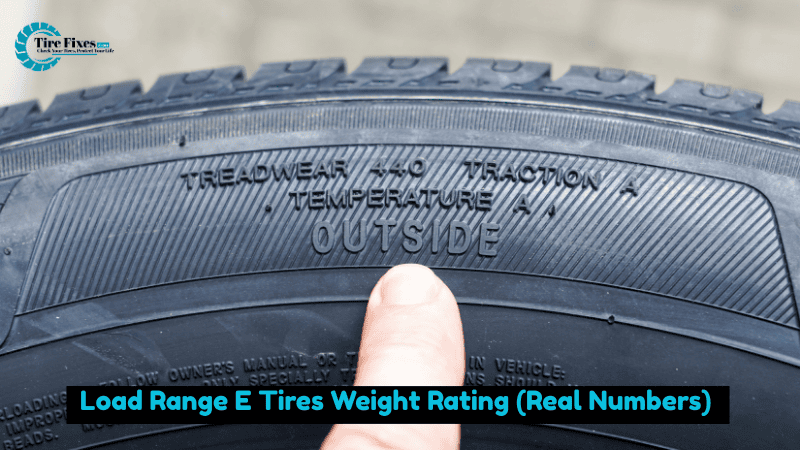
The exact weight rating depends on tire size, but here are real-world examples you’ll commonly see in the US:
| Tire Size | Load Range E Weight Capacity |
|---|---|
| LT225/75R16 | ~2,680 lbs per tire |
| LT245/75R16 | ~3,042 lbs per tire |
| ST225/75R15 (Trailer) | ~2,830 lbs per tire |
| 205/75R15 Trailer | ~2,830 lbs per tire |
Multiply that by four tires, and you’ll see why load range E tires are popular for towing and hauling.
What Does Load Range E Mean for Tires on Trucks?
For trucks, load range E tires are all about stability, control, and safety under load.
You’ll usually find them on:
- ¾-ton trucks (2500 series)
- 1-ton trucks (3500 series)
- Diesel pickups used for towing
- Work trucks carrying tools or equipment daily
Benefits on Trucks:
- Less sidewall flex when towing
- Better control in crosswinds
- Reduced sway with trailers
- Improved durability on rough roads
Downsides:
- Stiffer ride when unloaded
- Heavier tires
- Higher cost than load range D
If your truck spends most of its life empty, load range E may be overkill.
Load Range E Tires for Towing: When They Make Sense
If you tow regularly, load range E tires aren’t just a “nice to have” — they’re often the right tool for the job.
They shine when towing:
- Travel trailers
- Fifth wheels
- Boat trailers
- Horse trailers
- Heavy equipment
Why Tow Vehicles Love Load Range E Tires
- Higher PSI keeps sidewalls firm
- Less heat buildup at highway speeds
- Better tracking during lane changes
- More predictable braking behavior
That confidence matters when you’re pulling 7,000–12,000 pounds behind you.
Load Range E Trailer Tires (Very Important Distinction)
Trailer tires are different from truck tires — and this is where people mess up.
Common Load Range E Trailer Sizes:
- ST225/75R15 load range E
- 205/75R15 trailer tires load range E
- 225/75R15 load range E trailer tires
- 205/75R14 trailer tires load range E
- 14 inch trailer tires load range E
ST (Special Trailer) tires have:
- Stiffer sidewalls than truck tires
- Designed to resist sway
- Built to sit under load for long periods
Using passenger or light truck tires on trailers is a bad idea — I’ve seen blowouts happen fast.
Load Range E Tire Pressure: What You Need to Know
This is where a lot of folks go wrong.
Max Pressure ≠ Always Required Pressure
Yes, load range E tires are rated up to 80 PSI — but that doesn’t mean you should always run them at 80.
General Guidelines:
- Fully loaded truck or trailer: closer to max PSI
- Light load or daily driving: lower PSI is fine
- Always check the vehicle or trailer placard first
Why Pressure Matters:
- Too low = heat buildup and blowouts
- Too high (unloaded) = harsh ride and uneven wear
A proper load range E tire pressure chart from the manufacturer is gold here.
Load Range E vs D Tires: What’s the Difference?
This is one of the most searched comparisons — and for good reason.
| Feature | Load Range D | Load Range E |
|---|---|---|
| Ply Rating | 8-ply | 10-ply |
| Max PSI | ~65 PSI | ~80 PSI |
| Ride Comfort | Softer | Stiffer |
| Towing | Moderate | Heavy-duty |
| Cost | Lower | Higher |
Bottom line:
If you tow heavy or haul often → E
If you drive mostly empty → D may be better
Load Range E All-Terrain Tires: Worth It?
Yes — but only for the right driver.
Load range E all terrain tires are popular on:
- Overland builds
- Heavy diesel trucks
- Work trucks on dirt or gravel
Pros:
- Tough sidewalls
- Better puncture resistance
- Handles weight + off-road abuse
Cons:
- Loud on highways
- Stiff ride
- Overkill for light-duty use
If your truck never sees dirt or heavy loads, you’re paying for strength you don’t use.
Are Load Range E Tires Right for You?
Ask yourself these questions honestly:
- Do I tow more than 6,000 lbs regularly?
- Is my truck often fully loaded?
- Do I drive long highway miles under load?
- Do I experience trailer sway or sidewall flex now?
If you answered yes to most of these — load range E tires make sense.
If not, they may hurt ride comfort more than they help.
FAQs About Load Range E Tires
What does load range E mean on a tire?
It means the tire is rated for heavier loads and higher air pressure, typically up to 80 PSI.
What ply tire is load range E?
Load range E is equivalent to a 10-ply rated tire.
Are load range E tires good for daily driving?
They can be, but they ride stiffer when unloaded and aren’t ideal for light-duty daily use.
Can I replace load range D tires with E?
Yes, as long as the size matches — but expect a firmer ride.
Do load range E tires last longer?
Often yes, especially under heavy loads, because they’re built stronger and resist heat better.