
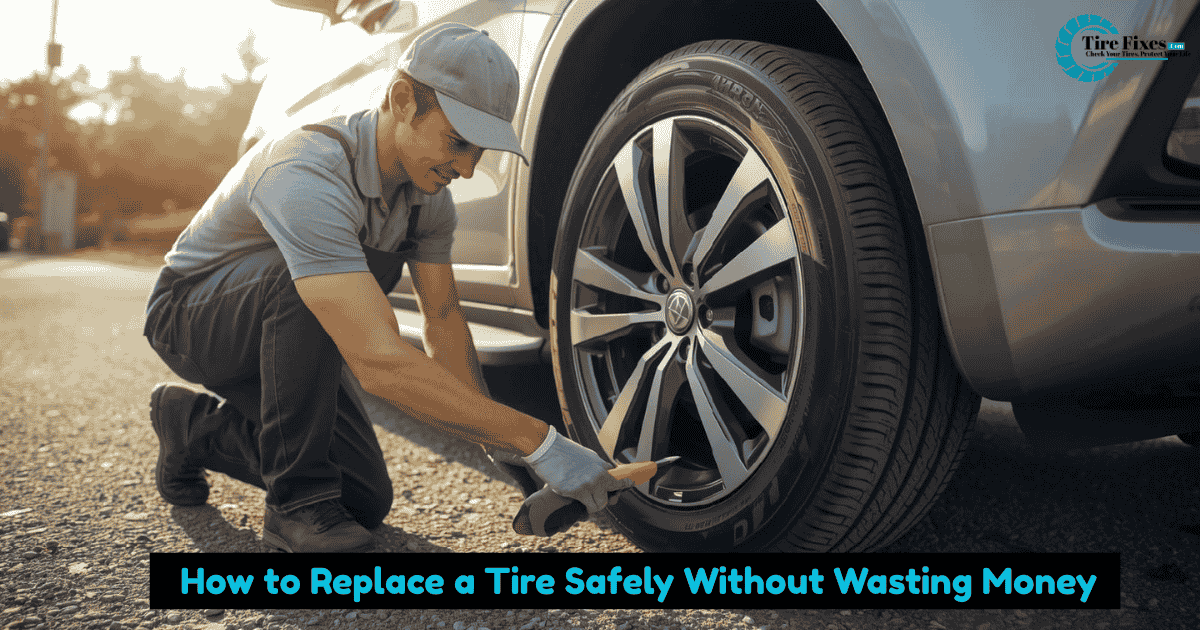
It always seems to happen at the worst time. You’re running late for work, pulling out of a grocery store parking lot, or halfway down a stretch of highway when the steering wheel suddenly feels off. That unmistakable thump-thump sound kicks in, and your stomach drops—you’ve got a flat tire.
I’ve been there more times than I can count. Rain coming down, traffic flying by, jack sinking into soft asphalt. Knowing how to replace a tire isn’t just a nice skill—it’s one of those basic car-owner realities that can save you time, money, and a whole lot of stress.
This guide walks you through everything, from recognizing when a tire truly needs replacing to doing it safely yourself—or knowing when it’s smarter to let a shop handle it. Whether you’re dealing with a car tire or wondering how to replace a bike tire, this breakdown keeps things clear, practical, and realistic.
Problem Explanation
Why Tire Replacement Matters
A damaged or worn-out tire isn’t just inconvenient—it’s dangerous. Tires are the only part of your vehicle touching the road. When one fails, your braking distance increases, handling suffers, and the risk of a blowout skyrockets.
Replacing a tire at the right time keeps your vehicle predictable and safe, especially during sudden stops, heavy rain, or highway driving. Ignoring the problem often leads to bigger repair bills down the road.
Common Causes
Why Tires Need Replacement
Most tire replacements come down to everyday wear and real-world road conditions. Common causes include:
- Punctures from nails or screws, especially on construction-heavy roads
- Sidewall damage from curbs or potholes
- Worn tread from normal mileage and poor rotations
- Blowouts caused by underinflation or heat buildup
- Age-related cracking, even if tread looks okay
Some damage can be repaired. Others mean the tire’s done for—no shortcuts.
How to Replace a Tire: Symptoms / Warning Signs
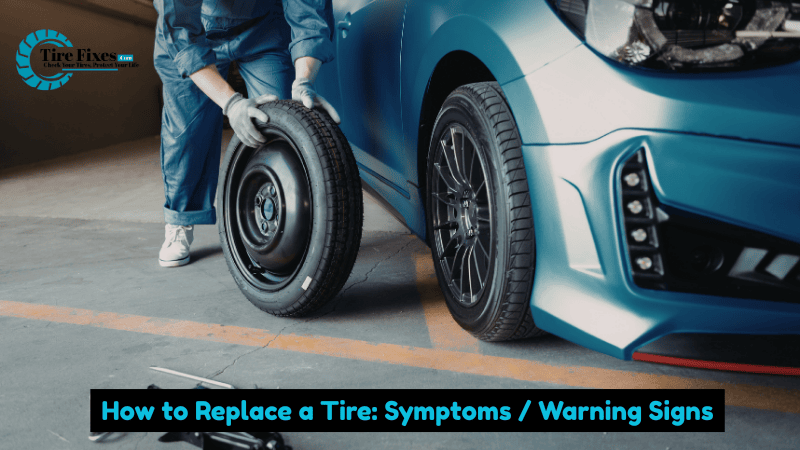
Signs You Need a New Tire
Watch for these red flags before things get worse:
- Tire pressure warning light that won’t reset
- Visible bulges, cracks, or exposed cords
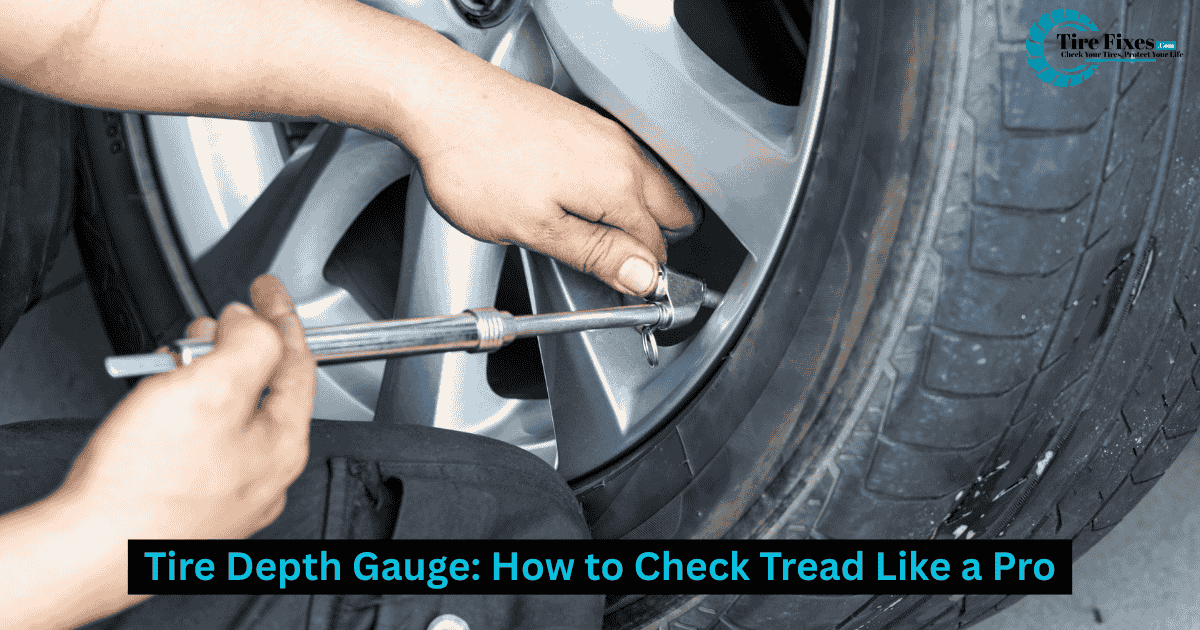
- Tread depth below 2/32″ (the penny test fails)
- Vibration or pulling while driving
- Repeated air loss even after reinflation
If you notice more than one of these, replacement is usually the safest move.
Step-by-Step Fixes / Solutions
How to Replace a Tire (Car Tire)
Replacing a car tire isn’t complicated, but doing it safely matters.
Step 1: Get to a Safe Spot
Pull over to a flat, stable area away from traffic. Turn on hazard lights and set the parking brake.
Step 2: Loosen the Lug Nuts
Before lifting the car, crack the lug nuts loose using a lug wrench. Don’t remove them yet.
Step 3: Jack Up the Vehicle
Position the jack under the manufacturer’s recommended lift point. Raise the car until the tire clears the ground.
Step 4: Remove the Tire
Fully remove the lug nuts and pull the tire straight off.
Step 5: Install the Spare or New Tire
Line up the wheel studs, slide the tire on, and hand-tighten the lug nuts.
Step 6: Lower and Tighten
Lower the vehicle, then fully tighten lug nuts in a star pattern.
How to Replace a Bike Tire
If you’re wondering how to replace a bicycle tire, the process is different but simpler:
- Release the brakes and remove the wheel
- Use tire levers to remove the tire bead
- Replace the tube or tire
- Reseat the tire evenly
- Inflate to recommended PSI
Bike tires usually take 15–30 minutes once you’ve done it a few times.
How to Replace a Tire: DIY vs Professional Repair
Should You Replace It Yourself?
DIY Tire Replacement Pros:
- Saves money
- Faster in emergencies
- Builds confidence
DIY Cons:
- Requires tools
- Physical effort
- Risk if done incorrectly
Professional Replacement Pros:
- Proper balancing
- Warranty support
- No safety guesswork
If it’s a temporary spare or emergency, DIY is fine. For full tire replacement, especially on newer vehicles, a shop is often worth it.
Safety Considerations
Don’t Cut Corners Here
Tire replacement involves lifting a vehicle—mistakes can cause serious injury.
- Never work on uneven ground
- Use wheel chocks
- Keep body parts out from under the car
- Don’t exceed spare tire speed limits
If anything feels unstable, stop and call for help.
Cost Expectations
How Much Does It Cost to Replace a Tire?
Costs vary widely depending on tire type and vehicle:
- Economy tire: $80–$120 installed
- Mid-range tire: $130–$180
- Performance or truck tire: $200–$350+
So when people ask how much does it cost to replace a tire, the honest answer is: it depends—but budgeting $150 per tire is reasonable for most cars.
Prevention Tips
Make Tires Last Longer
A little maintenance goes a long way:
- Check tire pressure monthly
- Rotate tires every 5,000–7,000 miles
- Avoid curbs and deep potholes
- Don’t overload your vehicle
These habits easily add thousands of miles to tire life.
Common Mistakes
Errors I See All the Time
- Overtightening lug nuts
- Driving too long on a spare
- Ignoring matching tire sizes
- Skipping wheel balancing
These mistakes shorten tire life and affect handling.
Conclusion / Final Advice
Knowing how to replace a tire gives you control in a stressful situation. Whether you’re on the shoulder of a highway or in your driveway, the key is staying calm, safe, and realistic about your limits. If you’re unsure, there’s no shame in calling a pro—your safety always comes first.
FAQs About How to Replace a Tire
1. How long does it take to replace a tire?
For a DIY car tire change, expect 20–40 minutes if you have tools ready. A professional shop usually finishes in 30–60 minutes, including balancing.
2. Can I replace just one tire?
Yes, but it’s not always ideal. On AWD vehicles especially, mismatched tread depth can cause drivetrain issues.
3. Is it safe to drive on a spare tire long-term?
No. Temporary spares are meant for short distances, usually under 70 miles, and lower speeds.
4. How do I know if a tire can be repaired instead of replaced?
Punctures in the tread area under ¼ inch are often repairable. Sidewall damage usually isn’t.
5. How often should tires be replaced?
Most tires last 40,000–70,000 miles, but age matters too. Replace tires older than 6–7 years regardless of tread.
6. Does tire replacement include balancing?
At most shops, yes. Always confirm—unbalanced tires cause vibration and uneven wear.

One Comment