You’re pulling out of the driveway on a chilly morning, coffee in hand, already running five minutes late. The dash lights up—low tire pressure. Annoying, right? You might shrug it off, but driving on underinflated tires can quietly mess with your gas mileage, handling, and even your safety.
The good news? Learning how to put air in tires is one of the easiest car skills you can master, and it saves you money and stress long-term. Whether you’re topping off your tires in your garage or figuring out how to put air in tires at a gas station, this guide walks you through it like a seasoned mechanic riding shotgun—no jargon, no guesswork, just real-world advice that actually works.
Problem Explanation
Why Proper Tire Inflation Matters
Tires naturally lose air over time. Even brand-new tires can drop 1–2 PSI per month, and cold weather makes it worse. When tire pressure gets too low, the tire flexes more than it should, creating heat and uneven wear.
Driving around town or cruising the interstate on underinflated tires can lead to sluggish steering, longer stopping distances, and higher fuel costs. Overinflate them, and you’re dealing with a harsher ride and reduced traction. Knowing how to put air in a tire correctly keeps your car driving the way it was designed to—safe, smooth, and efficient.
Common Causes
Why Your Tires Lose Air
- Temperature changes – Cold mornings can drop tire pressure fast
- Normal air seepage – Rubber isn’t airtight forever
- Small punctures or nails – Slow leaks you might not notice
- Worn valve stems – Cracks let air escape over time
- Seasonal neglect – Tires often get ignored until a warning light comes on
Symptoms / Warning Signs
Signs Your Tires Need Air
- Low tire pressure (TPMS) light on the dashboard
- Car feels sluggish or pulls slightly while driving
- Reduced fuel mileage
- Tires look visibly low or “squished” at the bottom
- Steering feels less responsive, especially in corners
Step-by-Step Fixes / Solutions
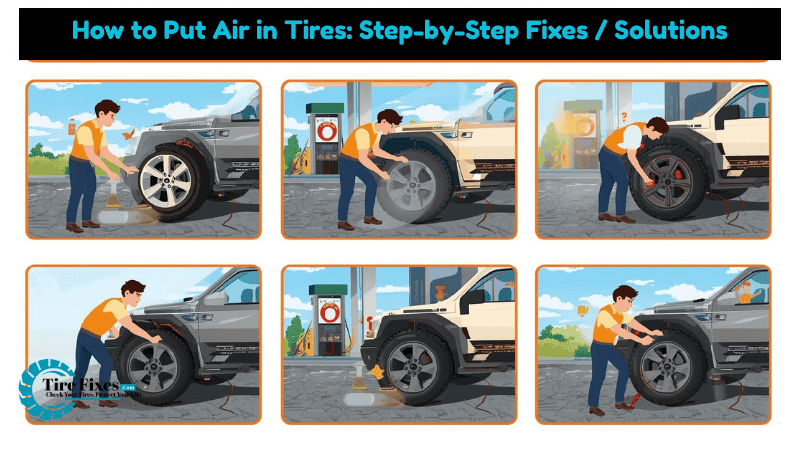
How to Put Air in Tires Safely and Correctly
Step 1: Find the Correct Tire Pressure
Check the sticker inside the driver’s door jamb. This lists the recommended PSI for front and rear tires. Do not rely on the number molded into the tire sidewall—that’s the maximum, not the recommendation.
Step 2: Get a Reliable Air Source
You can use:
- A home air compressor
- A portable 12V tire inflator
- A gas station air pump (often free or $1–$2)
If you’re learning how to put air in your tires at a gas station, park close enough so the hose reaches all four tires.
Step 3: Remove the Valve Cap
Unscrew the small plastic or metal cap from the valve stem and keep it somewhere safe—dropping it in the parking lot is easier than you think.
Step 4: Check Current Tire Pressure
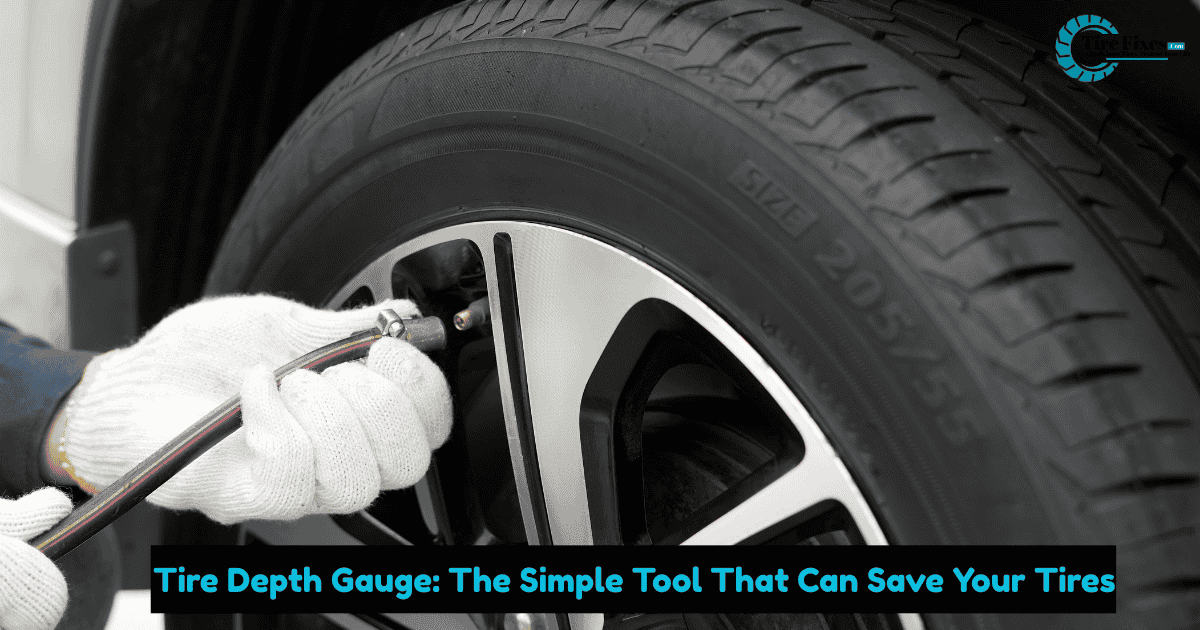
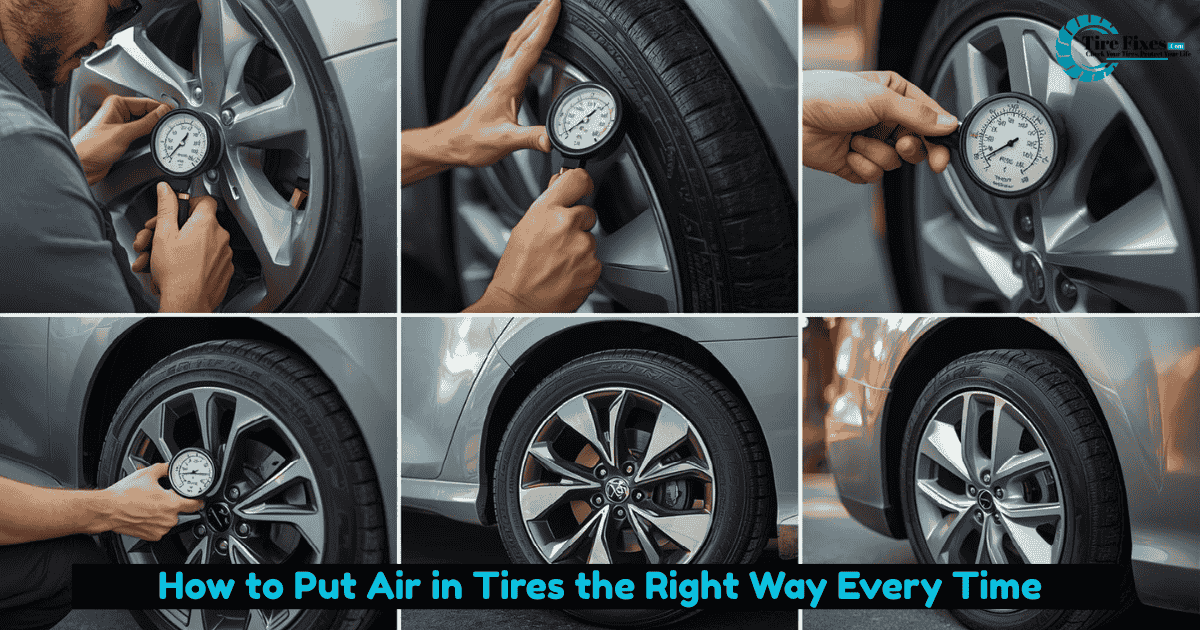
Press the gauge firmly onto the valve stem. You’ll hear a brief hiss. Read the PSI and compare it to the recommended number.
Step 5: Add Air in Short Bursts
Attach the air hose and add air in 5–10 second bursts. Check the pressure between bursts to avoid overinflating.
Step 6: Adjust as Needed
If you add too much air, press the small metal pin inside the valve stem to release air slowly.
Step 7: Replace the Valve Cap
Once you hit the correct PSI, screw the valve cap back on snugly. Repeat for all tires, including the spare if accessible.
How to Put Air in Tires: DIY vs Professional Repair
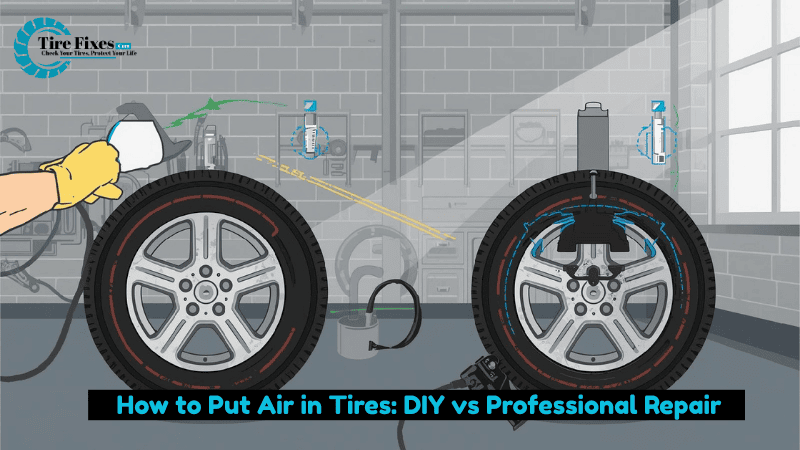
Should You Do It Yourself or Get Help?
DIY Pros
- Fast and cheap
- No appointment needed
- Builds confidence as a driver
DIY Cons
- Requires a gauge or inflator
- Easy to overinflate if rushed
Professional Pros
- Accurate digital equipment
- Free checks at many tire shops
- Helpful if tires won’t hold air
Professional Cons
- Takes time
- Not always available after hours
If you’re just adding air, DIY is the way to go. If pressure keeps dropping, a shop visit is worth it.
Safety Considerations
Stay Safe While Inflating Tires
- Inflate tires when they’re cold, not after driving
- Never exceed the manufacturer’s recommended PSI
- Keep hands and face clear of the valve stem
- Don’t ignore repeated pressure loss—it may signal a leak
- Make sure your car is parked safely away from traffic
Cost Expectations
How Much Does It Cost?
- Gas station air: Free to $2
- Portable inflator: $25–$60 (one-time purchase)
- Tire shop pressure check: Often free
Compared to tire replacements, keeping proper pressure is dirt cheap.
Prevention Tips
How to Avoid Low Tire Pressure Issues
- Check tire pressure once a month
- Inspect tires before long road trips
- Keep valve caps in good condition
- Adjust pressure with seasonal temperature changes
- Pay attention to TPMS warnings early
Common Mistakes
What Drivers Often Get Wrong
- Using the PSI number on the tire sidewall
- Forgetting to check all four tires
- Inflating right after highway driving
- Ignoring slow leaks
- Overfilling and assuming “more is better”
Conclusion / Final Advice
Final Thoughts on Tire Inflation
Knowing how to put air in tires is one of those small skills that makes a big difference. It takes five minutes, saves money, improves safety, and keeps your car feeling right on the road. Make it a habit, not a reaction—and your tires will thank you with longer life and better performance.
FAQs About How to Put Air in Tires
1. How often should I put air in my tires?
Most drivers should check tire pressure once a month and before long trips. Seasonal temperature changes often require adjustments.
2. Can I drive with the low tire pressure light on?
You can, but it’s not recommended. Low pressure affects handling, braking, and fuel economy and may cause tire damage.
3. Is it okay to overinflate slightly?
No. Overinflated tires reduce traction and wear unevenly. Always stick to the recommended PSI.
4. How long does it take to put air in tires?
Usually 5–10 minutes for all four tires using a gas station pump or home inflator.
5. Should I inflate tires when hot or cold?
Always inflate when tires are cold for the most accurate pressure reading.
6. Do I need a special gauge?
A basic digital or analog tire gauge works fine. Accuracy matters more than brand.