
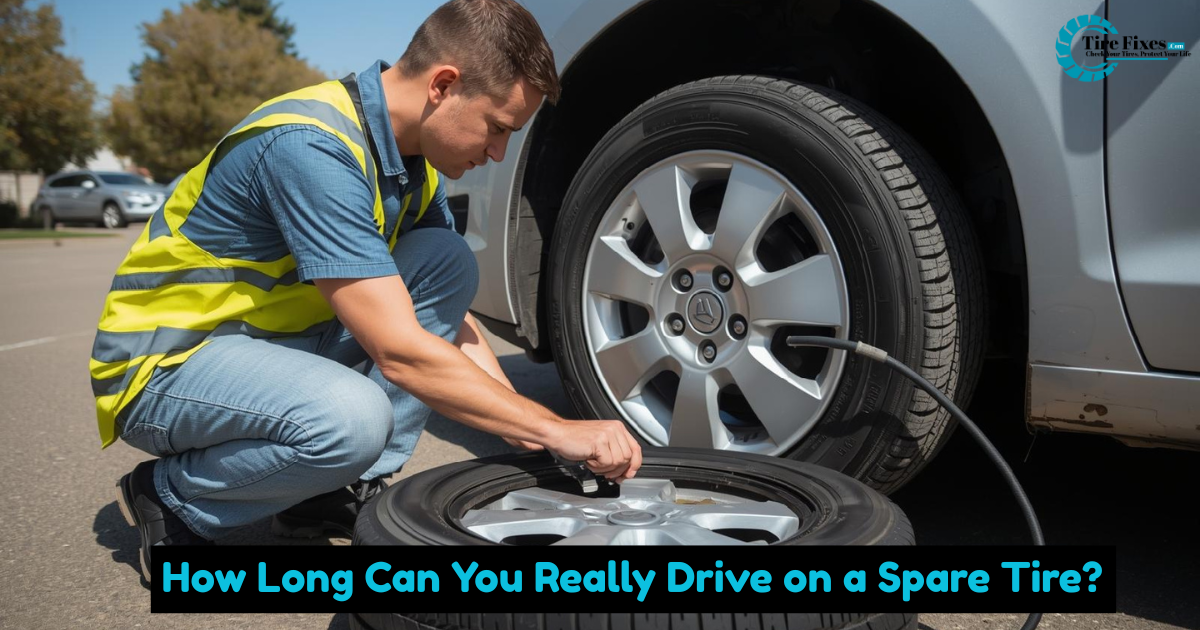
It’s always the worst timing. You’re halfway to work, late for school pickup, or cruising down the interstate when the tire light pops on—or worse, you feel that unmistakable thump-thump-thump. You pull over, swap on the spare, and suddenly one question is front and center: how long can you drive on a spare tire before it becomes a bigger problem?
If you’re like most drivers, you’ve heard everything from “just a few miles” to “you’ll be fine for a couple of days.” The truth sits somewhere in the middle, and it depends heavily on what type of spare tire you’re driving on, how fast you’re going, and the kind of roads you’re dealing with. This guide breaks it all down in plain English—no scare tactics, no guesswork—just real-world advice from someone who’s seen plenty of spares pushed way past their limits.
Understanding the Spare Tire Problem
A spare tire is exactly what the name implies: a temporary solution, not a replacement for a proper road tire. Most modern vehicles come with a compact “donut” spare that’s lighter, smaller, and built only to get you off the shoulder safely and to a repair shop. It’s not designed for highway cruising, sharp handling, or long-distance driving.
Driving too long on a spare tire can stress your suspension, throw off braking, confuse traction control systems, and even damage your differential—especially on front-wheel-drive or AWD vehicles. Knowing the limits matters more than most drivers realize.
Common Reasons Drivers End Up on a Spare Tire
Flat tires don’t always come from obvious blowouts. In real-world driving, these are the most common causes:
- Nails or screws picked up in parking lots or construction zones
- Potholes on city streets or poorly maintained highways
- Sidewall damage from curbs or road debris
- Low tire pressure ignored too long
- Old or dry-rotted tires finally giving up
Most of these happen without warning, which is why understanding spare tire limits ahead of time can save you a lot of stress.
Warning Signs You’re Driving Too Long on a Spare
Your car will usually tell you when a spare tire is overstaying its welcome. Watch for:
- Pulling or drifting to one side
- Steering that feels loose or twitchy
- Increased vibration at higher speeds
- ABS or traction control warning lights
- A noticeable burning smell after driving
If you notice any of these, it’s time to slow down—or stop driving altogether.
How Long Can You Drive on a Spare Tire? (Realistic Limits)
Donut / Compact Spare Tire
This is the most common type found in modern cars.
Typical limits:
- Distance: 50–70 miles max
- Speed: No more than 50 mph
In the real world, that usually means driving straight to a tire shop, not running errands all day. Donut spares have less tread, thinner rubber, and reduced load capacity. Push them too far, especially in hot weather, and failure is a real risk.
Full-Size Spare Tire
Some trucks, SUVs, and older vehicles come with a full-size spare.
Typical limits:
- Distance: 100+ miles (short-term use)
- Speed: Normal speeds, cautiously
Even then, if it’s not the same brand, size, or tread depth as your other tires, it should still be treated as temporary—especially on AWD vehicles.
Run-Flat Tires (Special Case)
If your car uses run-flat tires and you lose air:
- Distance: 50–100 miles
- Speed: Usually under 50 mph
Always check your owner’s manual, because limits vary by manufacturer.
Step-by-Step: What to Do After Installing a Spare Tire
1. Confirm Which Type of Spare You Have
Look for labeling on the tire itself. Words like “Temporary Use Only” or “Max 50 MPH” are your biggest clues.
2. Check Tire Pressure Immediately
Many spares sit unused for years and are often underinflated. Proper pressure is usually printed on the sidewall.
3. Adjust Your Driving Style
- Avoid highways if possible
- Accelerate slowly
- Brake earlier than normal
- Take corners gently
4. Plan the Shortest Route to Repair
Your goal isn’t to “get through the week.” It’s to get safely to a tire repair or replacement as soon as possible.
DIY Fix vs Professional Repair
Driving on a spare often leads to the next decision: fix or replace?
DIY repair makes sense if:
- The puncture is small
- It’s located in the tread (not the sidewall)
- You have proper tools and experience
Professional repair is better when:
- The tire lost air rapidly
- There’s sidewall damage
- The tire is older or worn
- You drive an AWD vehicle
When in doubt, let a professional inspect it. A bad repair can cost far more later.
Safety Considerations You Shouldn’t Ignore
Spare tires reduce traction, braking ability, and overall stability—especially in rain or snow. On US highways where traffic flows at 70+ mph, driving long distances on a donut spare puts you at real risk.
Never tow, haul heavy loads, or drive aggressively on a spare tire. It’s not just about the tire—it’s about how your entire vehicle responds in an emergency situation.
Cost Expectations in the US
Here’s what most drivers can expect:
- Tire repair: $20–$40
- Budget tire replacement: $90–$150
- Mid-range tire: $150–$250
- Full-size spare purchase: $200–$400
Replacing a tire quickly is almost always cheaper than dealing with suspension or drivetrain damage later.
How to Avoid Needing a Spare in the Future
A few habits go a long way:
- Check tire pressure monthly
- Inspect tread and sidewalls regularly
- Avoid potholes and curbs when possible
- Replace aging tires before they fail
- Keep your spare properly inflated
Most flat tires give warning signs long before they leave you stranded.
Common Mistakes Drivers Make with Spare Tires
- Treating a donut spare like a normal tire
- Driving highway speeds for long distances
- Ignoring spare tire pressure
- Forgetting to replace the spare after use
- Driving days—or weeks—on a temporary spare
These mistakes turn small problems into expensive ones fast.
Final Advice Before You Hit the Road
A spare tire is your lifeline—not a long-term solution. If you’re asking how long can you drive on a spare tire, the safest answer is only as long as it takes to get it fixed. Respect the limits, drive cautiously, and your car—and wallet—will thank you.
FAQs About How long can you drive on a spare tire
1. How long can you drive on a donut spare tire safely?
Most donut spare tires are designed for 50–70 miles at no more than 50 mph. They’re meant to get you to a repair shop, not handle daily driving or highway speeds.
2. Can you drive on a spare tire for a whole day?
You can, but it’s not recommended—especially with a donut spare. Short trips at low speeds are okay, but extended driving increases the risk of tire failure and vehicle damage.
3. Is it safe to drive on a spare tire on the highway?
Only briefly and at reduced speeds. Most donut spares aren’t built for sustained highway driving, where heat and speed can cause them to fail.
4. How long can you drive on a full-size spare tire?
A full-size spare can handle more distance, but it’s still temporary. If it doesn’t match your other tires, replace or rotate it as soon as possible.
5. Does weather affect how long you can drive on a spare tire?
Yes. Hot weather increases heat buildup, and rain or snow reduces traction even more. Both shorten the safe lifespan of a spare tire.

One Comment